
Making Hope Visible for All Cancer Patients
Our cancer imaging agent platform provides a new technology to enhance surgeons ability to remove cancer during surgery


Making Hope Visible for All Cancer Patients
Our cancer imaging agent platform provides a new technology to enhance surgeons ability to remove cancer during surgery


Making Cancer Visible During Surgery
Intraoperative molecular imaging (IMI) uses targeted fluorescent agents and near-infrared light to help surgeons visualize cancer cells in real time during surgery. By binding to molecular markers expressed on tumor tissue, IMI highlights cancer margins and lymph nodes that are invisible to the naked eye, improving precision and completeness of resection.
Integro Theranostics is a clinical stage company developing a cancer fluorescent imaging agent, Cronexitide Lanocianine (CXL) and CancerVision® Goggles within the IMI space. This platform will provide an accurate, real-time visualization of cancer for the surgeon during surgery.

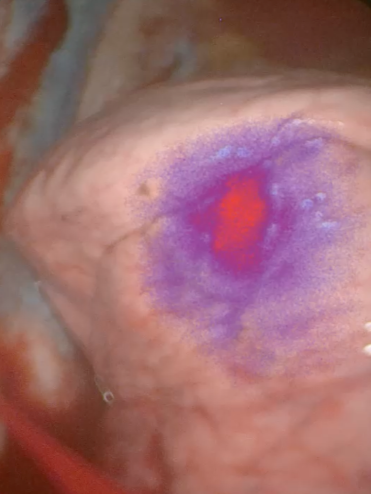
We use fluorescence to improve patient outcomes.
Complete removal of cancerous tumor tissue and lymph nodes is the hallmark of a successful surgery. However, surgeons have limited insight into the success of surgery while in the operating room, resulting in increased risk of cancer recurrence and an elevated rate of repeat surgeries.
With Integro’s fluorescent imaging agent, Cronexitide Lanocianine (CXL, formerly LS301), surgeons can see the amount and location of cancer cells and differentiate between healthy and cancerous tissue during surgery.


Meet Dr. Samuel Achilefu, Scientific Visionary
The inventor of Integro’s cutting-edge technologies is a pioneering expert in the Intraoperative Molecular Imaging (IMI) space.
Optimizing Cancer Clinical Trials with Real Time AI Powered Solutions
Identify patterns and trends through algorithms that enhance the detection of cancer with greater accuracy during surgery
Deliver data-driven clinical decision support by unifying imaging data to optimize cancer trial insights with traceable pathways
Streamline data and analysis processes to unlock new efficiencies and simplify workflows
Enable intraoperative pathology assessment through computer vision that helps identify cancer.


Committed to Addressing Health Disparities
Our product development priorities are informed by our commitment to improving disparities in cancer treatment and patient outcomes. Inadequate health insurance, poor access to high-quality detection and treatment, and lack of diversity in clinical trials are just some of the myriad of factors that contribute to cancer health disparities. Integro is committed to developing products that are accessible to all patients and in establishing partnerships to pursue cancer health equity.
-
Black Americans have the highest overall cancer death rate and are more likely than White Americans to be diagnosed with lung cancer at a late stage, when it’s harder to treat. The American Lung Association reports that Black individuals with lung cancer are 13% less likely to be diagnosed early, 19% less likely to receive surgical treatment, 11% more likely to receive no treatment, and 13% less likely to survive five years compared with White individuals. More broadly, only 27.4% of lung cancers are diagnosed at an early stage nationally, when 5-year survival is much higher (~65%). This highlights how much outcomes depend on timely detection and access to definitive therapy. Historically, disparities have been more pronounced in men: one analysis reported higher lung cancer incidence and mortality in Black men vs White men, underscoring a persistent equity gap in a surgery-dependent disease.
-
Many minority populations are significantly underrepresented in cancer clinical trials, with these racial and ethnic groups also experiencing disparities in cancer care and outcomes. A study evaluating racial and ethnic representation in the 230 clinical trials that supported FDA oncology drug approvals from 2008-2018 found that only 3.1% of clinical trial participants were Black (Blacks represent 13.5% of the US population) and only 6.1% were Hispanic (Hispanics represent 18.5% of the US population). Integro Theranostics is committed to forging partnerships that will help to engage more minority participants in LS301 clinical trials.